Braided Benjamina Ficus Tree – Sculptural Indoor Statement Plant
Braided Benjamina Ficus – Living Sculpture for Your Interior
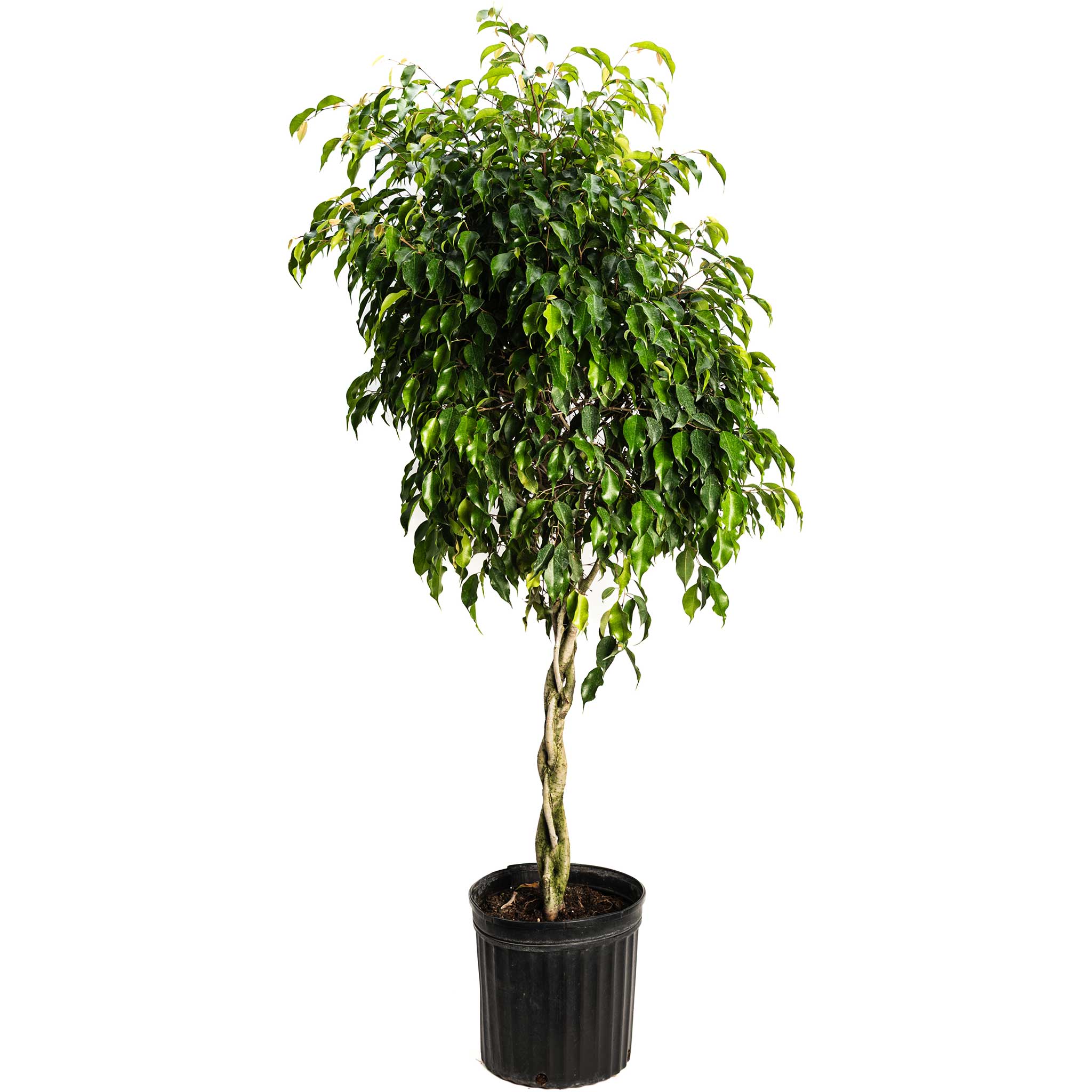
Some houseplants blend into the background. The Braided Benjamina Ficus is not one of them. With its hand-braided trunk — a labor-intensive technique that takes years to achieve — and a full, glossy canopy of slender, arching leaves, this is a plant that anchors a room. It brings the refined, architectural quality of a designer piece with the living warmth only a real plant can provide. Interior designers reach for it. Plant collectors covet it. And once you have one, you’ll understand why.
What Makes It Special
- Hand-braided trunk – Each tree is individually trained over years to create the signature woven trunk. No two are exactly alike.
- Bonsai-like elegance – The sculptural form delivers a refined, gallery-worthy aesthetic without any pruning or shaping on your part.
- Lush, glossy canopy – Dense, deep-green foliage cascades naturally from the crown, softening any interior space.
- Air-purifying – Ficus benjamina is recognized for filtering indoor air pollutants including formaldehyde and xylene.
- Vertical impact – Available up to 4–5 ft., it fills vertical space beautifully — ideal for corners, entryways, and beside furniture.
- Long-lived – With proper care, a Benjamina Ficus can thrive indoors for decades, becoming a true heirloom plant.
Perfect Placement
- Living room corners or beside a sofa as a vertical accent
- Entryways and foyers for a dramatic first impression
- Home offices and studios needing a natural, calming presence
- Sunlit dining rooms or breakfast nooks
- Commercial interiors — lobbies, boutiques, and studios
Picture it in the corner of your living room — morning light filtering through those glossy leaves, the braided trunk catching the eye of every guest. It’s the kind of plant that makes a space feel intentional, curated, alive.
Care Guide
- Light: Bright, indirect light is ideal. Avoid direct afternoon sun and dark corners. A north- or east-facing window works well.
- Water: Water when the top inch of soil is dry. Reduce frequency in winter. Avoid overwatering — the most common mistake.
- Humidity: Prefers moderate to high humidity. Mist occasionally or place near a humidifier in dry climates.
- Temperature: Keep between 60–75°F. Avoid cold drafts, heating vents, and sudden temperature swings.
- Leaf drop: Normal when first brought home as the plant adjusts to its new environment. Maintain consistent conditions and it will rebound fully.
- Fertilizer: Feed monthly with a balanced liquid fertilizer during spring and summer.
- Repotting: Every 2–3 years or when roots begin to circle the pot bottom.
Available Sizes
Choose from a 5-Gallon starter, a 3–4 ft. mid-size, or a commanding 4–5 ft. specimen — all with the signature braided trunk fully formed.
Love Architectural Indoor Trees?
Pair your Braided Ficus with the Norfolk Island Pine — another elegant, slow-growing indoor tree with a naturally symmetrical form, perfect for creating a layered, designer-quality indoor plant display.
Original: $149.95
-65%$149.95
$52.48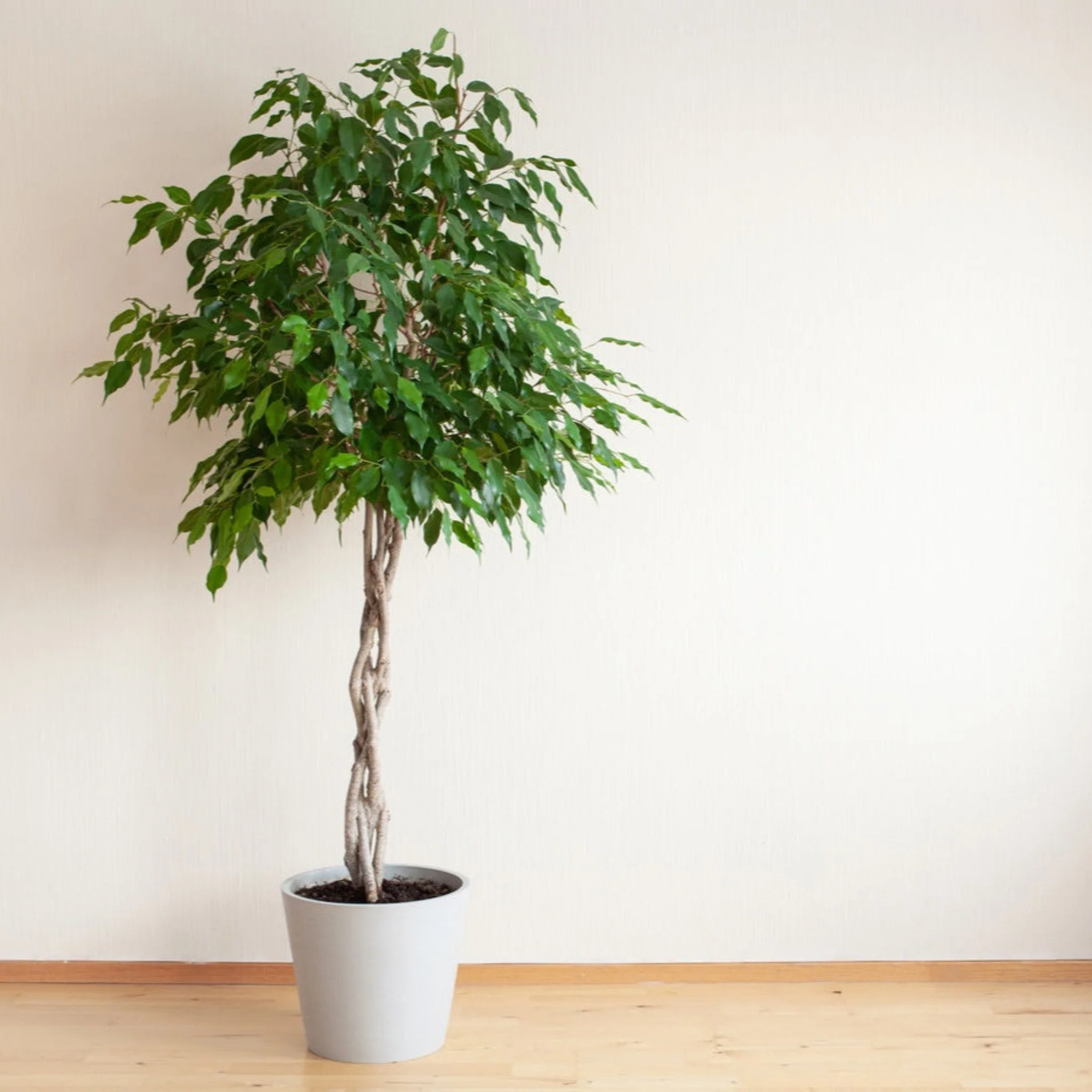

Description
Braided Benjamina Ficus – Living Sculpture for Your Interior
Some houseplants blend into the background. The Braided Benjamina Ficus is not one of them. With its hand-braided trunk — a labor-intensive technique that takes years to achieve — and a full, glossy canopy of slender, arching leaves, this is a plant that anchors a room. It brings the refined, architectural quality of a designer piece with the living warmth only a real plant can provide. Interior designers reach for it. Plant collectors covet it. And once you have one, you’ll understand why.
What Makes It Special
- Hand-braided trunk – Each tree is individually trained over years to create the signature woven trunk. No two are exactly alike.
- Bonsai-like elegance – The sculptural form delivers a refined, gallery-worthy aesthetic without any pruning or shaping on your part.
- Lush, glossy canopy – Dense, deep-green foliage cascades naturally from the crown, softening any interior space.
- Air-purifying – Ficus benjamina is recognized for filtering indoor air pollutants including formaldehyde and xylene.
- Vertical impact – Available up to 4–5 ft., it fills vertical space beautifully — ideal for corners, entryways, and beside furniture.
- Long-lived – With proper care, a Benjamina Ficus can thrive indoors for decades, becoming a true heirloom plant.
Perfect Placement
- Living room corners or beside a sofa as a vertical accent
- Entryways and foyers for a dramatic first impression
- Home offices and studios needing a natural, calming presence
- Sunlit dining rooms or breakfast nooks
- Commercial interiors — lobbies, boutiques, and studios
Picture it in the corner of your living room — morning light filtering through those glossy leaves, the braided trunk catching the eye of every guest. It’s the kind of plant that makes a space feel intentional, curated, alive.
Care Guide
- Light: Bright, indirect light is ideal. Avoid direct afternoon sun and dark corners. A north- or east-facing window works well.
- Water: Water when the top inch of soil is dry. Reduce frequency in winter. Avoid overwatering — the most common mistake.
- Humidity: Prefers moderate to high humidity. Mist occasionally or place near a humidifier in dry climates.
- Temperature: Keep between 60–75°F. Avoid cold drafts, heating vents, and sudden temperature swings.
- Leaf drop: Normal when first brought home as the plant adjusts to its new environment. Maintain consistent conditions and it will rebound fully.
- Fertilizer: Feed monthly with a balanced liquid fertilizer during spring and summer.
- Repotting: Every 2–3 years or when roots begin to circle the pot bottom.
Available Sizes
Choose from a 5-Gallon starter, a 3–4 ft. mid-size, or a commanding 4–5 ft. specimen — all with the signature braided trunk fully formed.
Love Architectural Indoor Trees?
Pair your Braided Ficus with the Norfolk Island Pine — another elegant, slow-growing indoor tree with a naturally symmetrical form, perfect for creating a layered, designer-quality indoor plant display.